Early 2000s Rock Bands That Still Hold Up, Two Decades Later
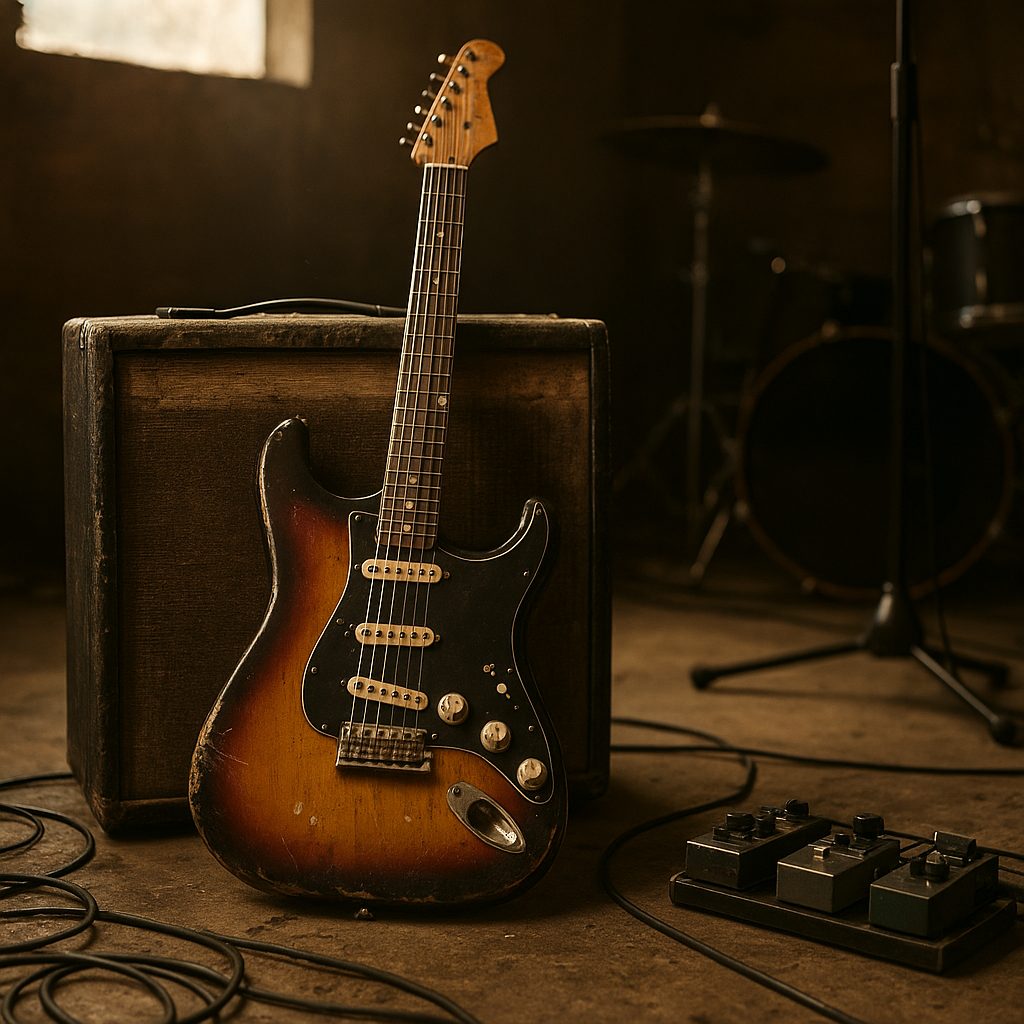
The early 2000s were a weird, wonderful pileup: garage rock revival, nu metal at its commercial peak, emo sneaking onto TRL, and a British invasion nobody saw coming. Two decades on, the early 2000s rock bands worth your time have separated themselves from the frosted tips. Here's who survived.
The garage revival that saved guitar music
In 2001, rock radio was drowning in post-grunge sameness — and then The Strokes showed up looking like they'd slept in their clothes and sounding like 1977 had been cryogenically frozen. "Is This It" is one of the great debut albums: thirty-six minutes, zero wasted notes, and a sound so dry and immediate it made everything around it feel overproduced. Julian Casablancas mumbled like he didn't care, which of course meant everyone did.
The White Stripes took the revival even further back to basics — two people, three chords, and a bass line played on a guitar that became "Seven Nation Army," quite possibly the most recognizable riff of the century. The Hives brought the showmanship ("Hate to Say I Told You So" remains a perfect three-minute tantrum), and The Vines' "Get Free" captured the chaos before the wheels came off. The whole wave proved that the '90s lesson still held — personality beats polish — something we talked about in our piece on the riffs that defined the '90s.
Nu metal: bigger than anyone wants to admit
Time to say it out loud: nu metal won. Linkin Park's "Hybrid Theory" was the best-selling debut of the entire decade, and "In the End" still fills any room it plays in. Chester Bennington could make a whisper feel like a scream and a scream feel like a hug — there hasn't been a rock frontman like him since. System of a Down's "Toxicity" is the strangest album ever to sell twelve million copies: political fury, Armenian folk melodies, and a song about pizza-adjacent chaos in "Chop Suey!" that remains untouchable live.
Tool sat slightly outside the movement but ate its lunch anyway — "Lateralus" is the thinking headbanger's masterpiece, built on Fibonacci sequences and Danny Carey's impossible drumming. And while some of the era's baggy-shorted also-rans have aged like milk, the genre's best records were heavier, catchier and weirder than the critics of the day ever admitted.
Emo goes overground
Somewhere around 2003, the kids in the skinny jeans took over. Jimmy Eat World's "The Middle" is the genre's perfect ambassador — an all-time power-pop chorus wearing an emo sweater. Taking Back Sunday and Brand New made heartbreak sound like a contact sport, and My Chemical Romance's "Three Cheers for Sweet Revenge" turned the whole scene theatrical. By the time Paramore's Hayley Williams showed up a few years later, the blueprint was set: massive hooks, genuine vulnerability, and not a single ironic wink.
What keeps emo alive isn't nostalgia — it's that the songwriting was real. Strip the eyeliner off "Welcome to the Black Parade" and you've got Queen-level ambition.
The second British invasion
While America argued about nu metal, Britain quietly produced a stack of enduring records. Coldplay's "A Rush of Blood to the Head" made them the biggest band on the planet — "Clocks" is unavoidable, but "God Put a Smile upon Your Face" is the one that actually rocks. Radiohead kicked the decade off with "Kid A," an album so influential it took guitar music years to process it, then reminded everyone they could still play guitar on "In Rainbows."
Muse answered the question "what if Queen had grown up on metal?" with "Absolution," and Franz Ferdinand's "Take Me Out" gave rock clubs a riff to pogo to. The Libertines burned bright and fast, but "Up the Bracket" still sounds like the best pub band in history playing the last night on Earth.
The alt-radio workhorses
Let's also give flowers to the bands who simply never missed. Foo Fighters spent the decade cementing their status as rock's most reliable band — "All My Life" and "Best of You" are modern classics by any measure. Queens of the Stone Age's "Songs for the Deaf" is the coolest driving album ever made, with Dave Grohl's drums pushing Josh Homme's riffs straight through the dashboard. Incubus evolved from funk-metal upstarts into genuine songwriters on "Morning View," and The Killers closed the era's first chapter with "Hot Fuss," an album whose singles still detonate every party they're played at.
The ones history underrated
Every era has bands the hits skipped over. The Shins' "Oh, Inverted World" quietly rewired what indie rock could sound like — melody first, everything else second. Interpol's "Turn On the Bright Lights" made post-punk revival sound like a noir film and still lands in any late-night drive. Yeah Yeah Yeahs gave us Karen O, one of the most electrifying frontpeople of the century, and "Maps," a ballad that could stop any room. Death Cab for Cutie's "Transatlanticism" turned heartbreak into architecture, and Modest Mouse's "Float On" proved a weird band could have a genuine pop moment without sanding off a single edge. None of them topped the rock charts for long. All of their records still get passed between friends like contraband.
There's also a whole tier of one-album wonders worth rescuing from the bargain bin of memory. The Darkness gave the world permission to love glam again with "Permission to Land," falsetto and all. Jet's "Get Born" was shameless and glorious — "Are You Gonna Be My Girl" is still the first riff every Guitar Hero graduate learned. And The Bravery, The Fratellis and Wolfmother each made one record that can still headline a house party by itself. Not every band needs a ten-album legacy; sometimes one perfect summer of noise is the whole job.
Why it all aged so well
The early 2000s were the last decade where rock bands got famous primarily by being rock bands — before algorithms, before viral moments, before every genre blurred into playlist soup. The records were made to be played loud, in full, on actual instruments. That's the same reason the music holds up next to everything in our look at fifty years of rock evolution: conviction doesn't expire.
And if this sent you back even further, our guide to the grunge rock bands that started it all covers the Seattle explosion these bands grew up worshipping. The family tree of rock is a circle — the early 2000s just happened to be a very good ring.